
Tryonixs Blog
Jewelry Virtual Try-On: The Complete Guide for Jewelers
How AR jewelry try-on works for rings, earrings, and necklaces, and how jewelers use it to cut sizing uncertainty and lift conversion on high-consideration purchases.
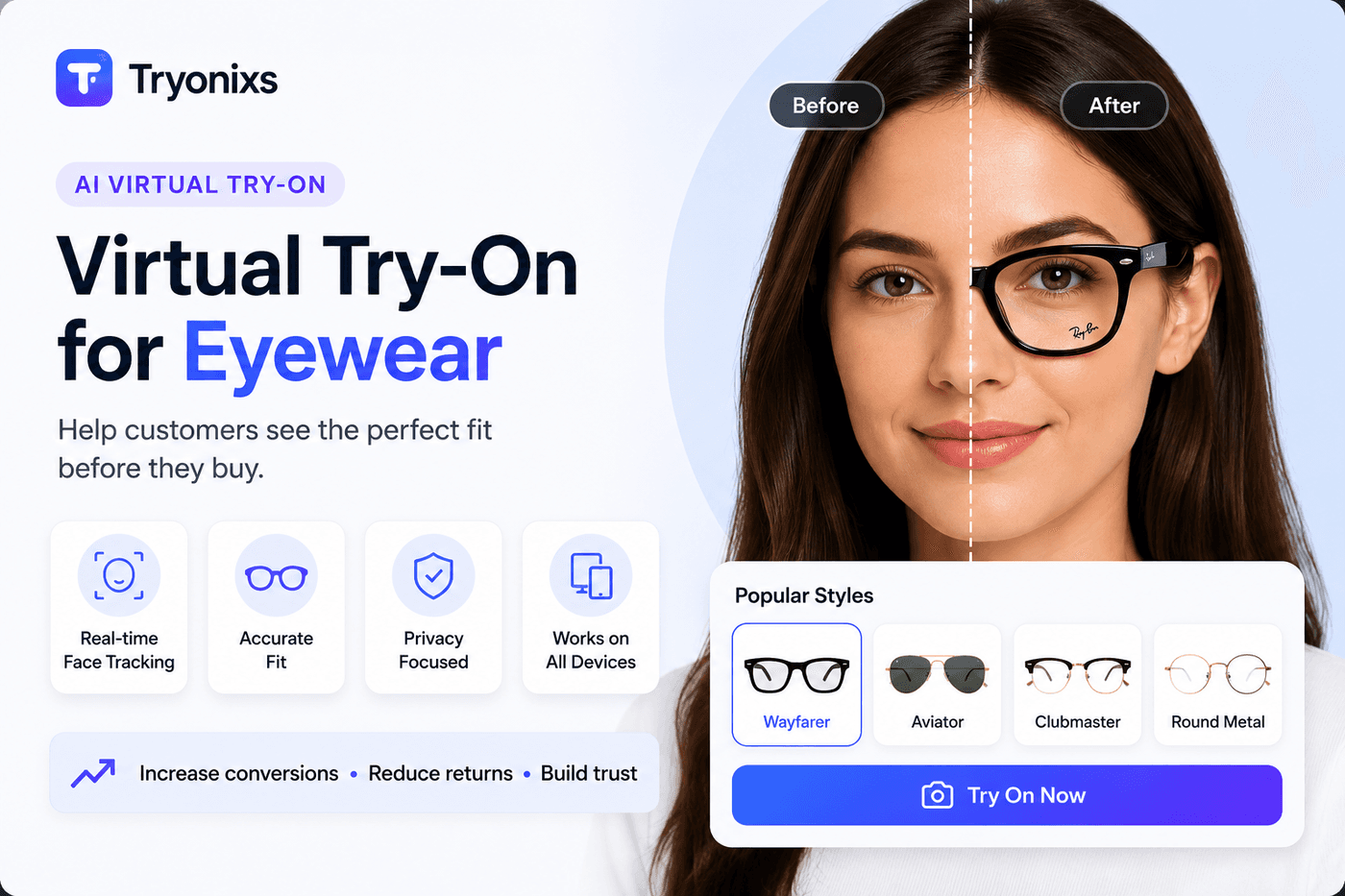
Jewelry virtual try-on uses hand, ear, and neck tracking to overlay rings, earrings, bracelets, and necklaces on a shopper's live camera feed in the browser, helping jewelers reduce sizing uncertainty and purchase anxiety on high-consideration items without an app download.
Why jewelry is a different try-on problem than eyewear or beauty
Eyewear try-on anchors a rigid object to a mostly-frontal face. Beauty try-on maps color and texture onto skin. Jewelry try-on has to solve a harder tracking problem: hands rotate through a much wider range of motion than faces, fingers occlude each other, ears are small and partially hidden by hair, and necklines vary by clothing and posture from one photo to the next.
That is why jewelry virtual try-on typically ships as several purpose-built tracking modes rather than one generic model — hand tracking for rings and bracelets, ear detection for earrings, and neckline detection for necklaces and pendants.
How AR jewelry try-on works
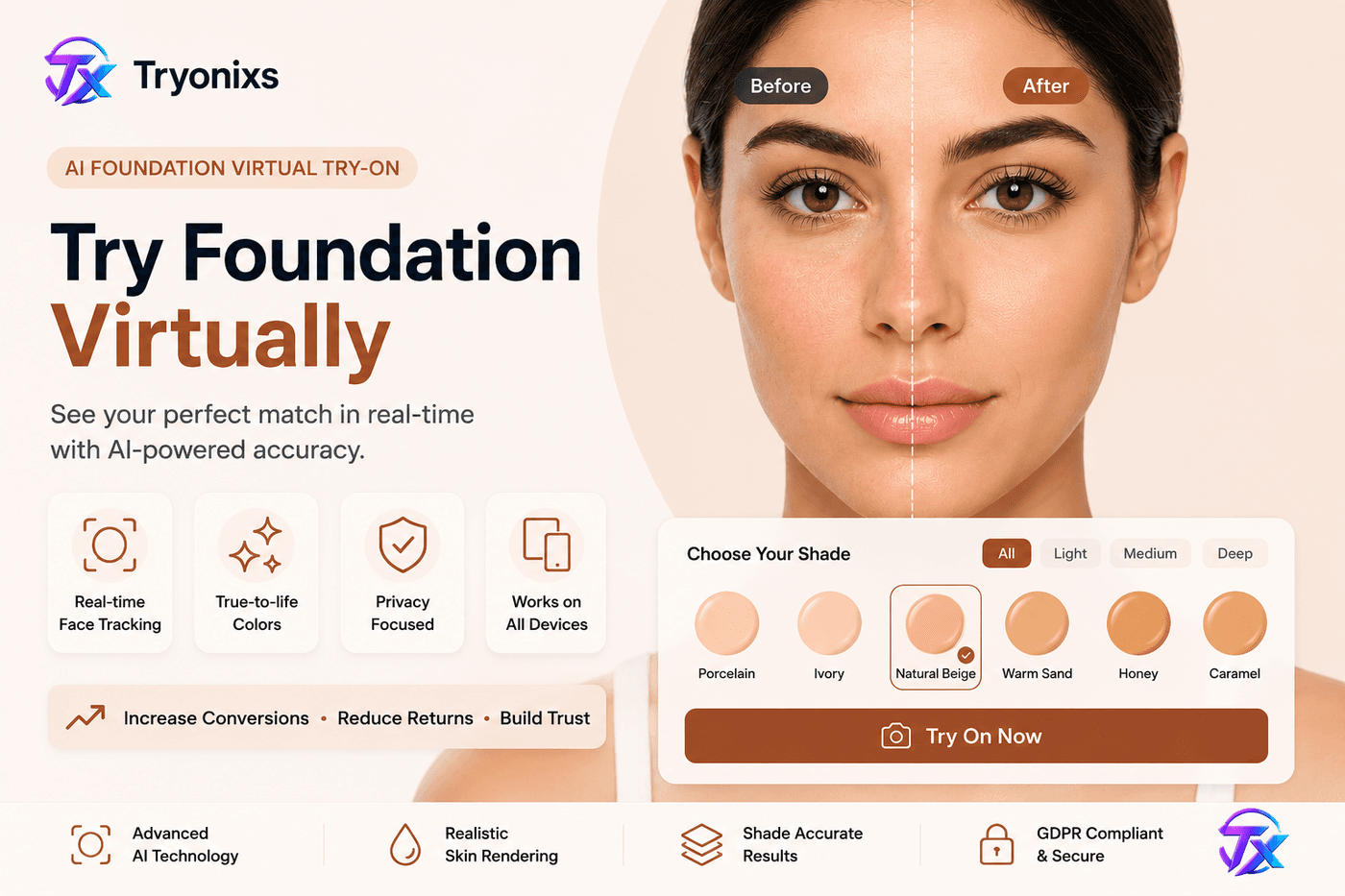
The pipeline follows the same general shape across categories. A computer-vision model detects landmarks specific to the body part in question — knuckle and finger joint positions for rings, ear lobe and helix position for earrings, collarbone and neckline contour for necklaces. Those landmarks drive the position, scale, and rotation of a 3D or high-resolution 2D jewelry asset, which is then composited onto the live camera frame in real time.
Realism depends heavily on two things beyond tracking accuracy: how the metal and gemstones are rendered (reflections, refraction, and sparkle sell the "is this real" impression far more than raw tracking precision), and how well the asset is prepared — a ring modeled with correct proportions relative to an average finger will look wrong on a shopper with unusually thin or wide fingers unless the system also estimates finger width and scales accordingly.
Ring, earring, necklace, and bracelet try-on each have their own constraints
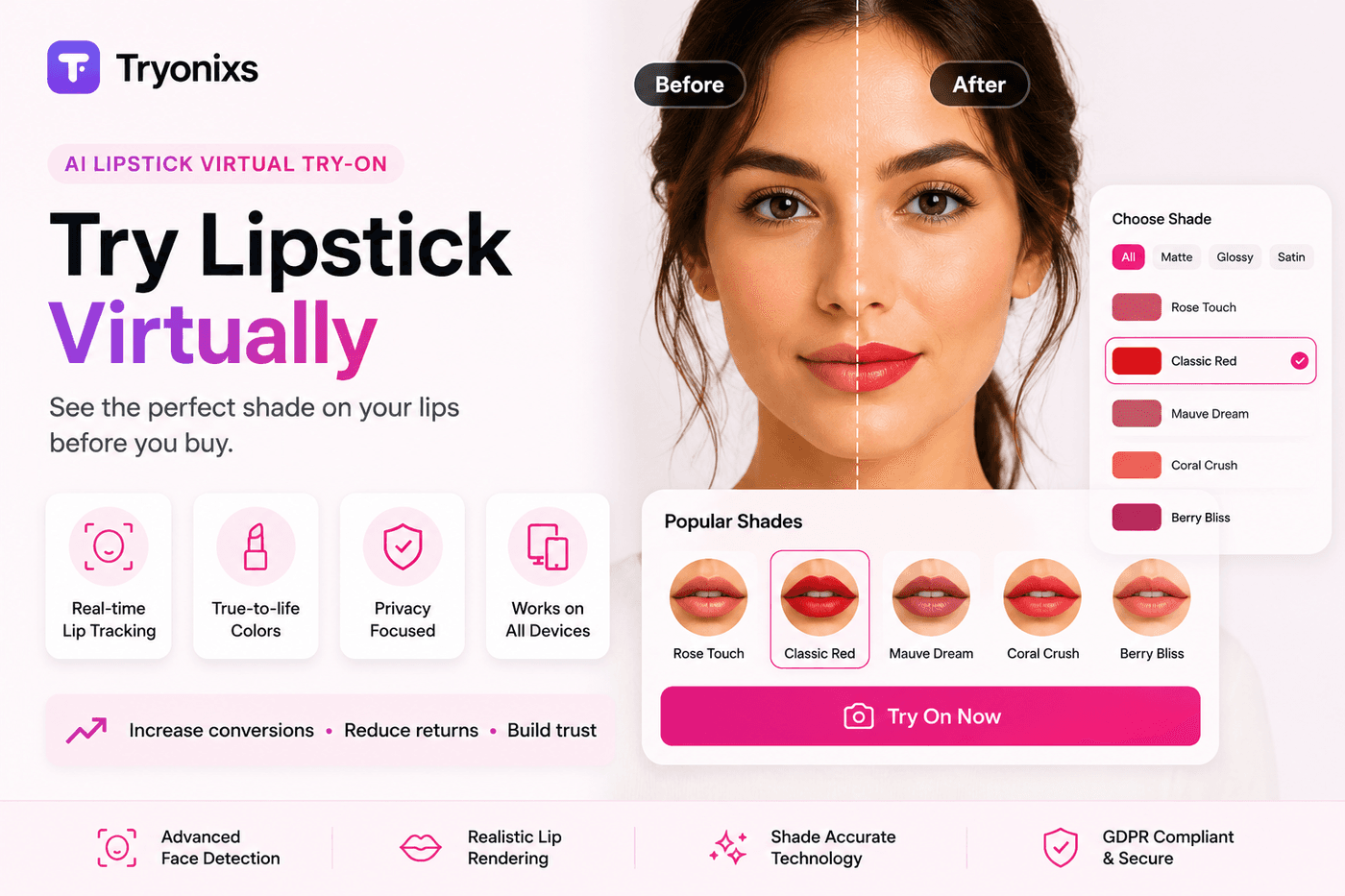
Ring try-on has to deal with the most degrees of freedom: hand pose, finger selection, and rotation all change dramatically between shoppers and even between frames of the same session. Earring try-on is comparatively more stable once ear detection locks on, but hair occlusion is a persistent failure case worth testing for explicitly. Necklace try-on needs to account for draping — a rigid overlay that doesn't respond to neckline or chain length looks obviously fake, so better implementations model at least basic chain physics. Bracelet and bangle try-on borrows techniques from ring try-on but tracks wrist rotation and width instead of finger position.
Why try-on matters more for jewelry than for lower-cost categories
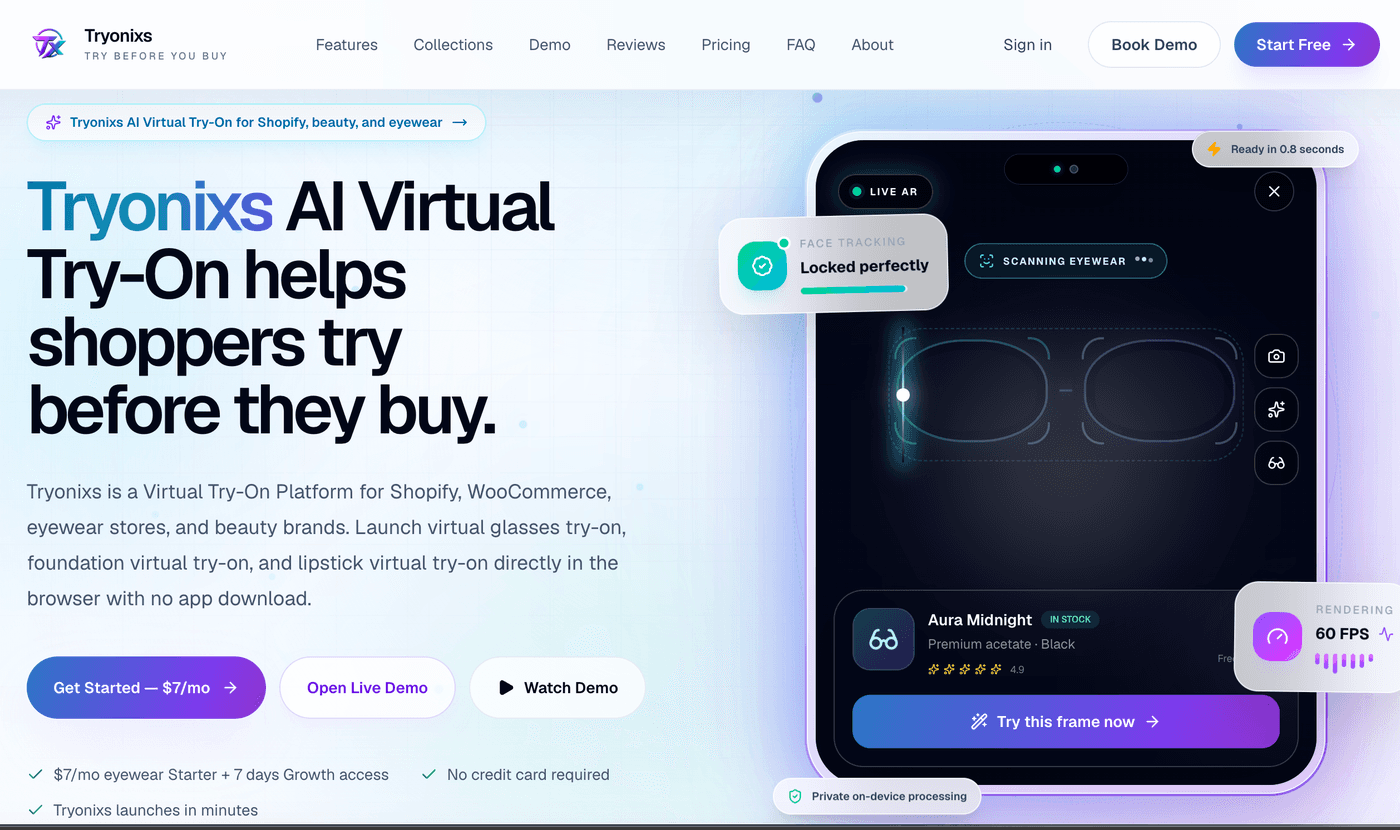
Jewelry, and fine jewelry in particular, sits at a purchase price point where uncertainty has an outsized effect on conversion. A shopper unsure whether a ring will look right on their hand, or whether a chain length will suit their neckline, is far more likely to abandon a $1,000+ purchase than a $30 one. Virtual try-on does not replace the reassurance of trying something on in person, but it closes a meaningful part of that gap for online and mobile shoppers, and it gives sales teams something concrete to point to in live chat or video consultations for made-to-order and custom pieces.
Implementation checklist for jewelers
Start with a pilot collection — typically best-selling rings or a signature earring line — rather than the full catalog. Prepare assets as isolated, transparent-background renders of the product with no hand, ear, or neck model already visible in the source image, since baked-in body parts confuse the compositing and look inconsistent with the shopper's own hand or ear. Add the Try On call-to-action directly on product pages, allowlist your storefront domain, and track try-on starts, completion rate, and add-to-cart rate on try-on-enabled SKUs against a control group before expanding coverage.
What to measure after launch
Track try-on session starts, completion rate, average time on product page, add-to-cart and purchase conversion for SKUs with try-on enabled versus otherwise identical control products, and return reasons tagged specifically to fit or sizing. For rings and bracelets, also watch how often shoppers use any sizing-estimate feature versus manually selecting a size — that signal tells you whether your sizing UX is actually trusted.
Virtual try-on previews
Frequently asked questions
- Does virtual jewelry try-on work for rings specifically?
- Yes. Ring try-on uses hand and finger-joint tracking to position a 3D or transparent-asset ring render on the shopper's own hand in the browser, updating in real time as the hand moves or rotates.
- How accurate is ring size estimation from a camera?
- Camera-based ring size estimation gives a useful starting estimate but should be treated as a guide rather than a guarantee — reference-object calibration (like sizing against a common object or a printed guide) improves accuracy meaningfully over an uncalibrated single-frame estimate.
- Can virtual try-on handle custom or made-to-order jewelry?
- Yes, as long as a 3D model or accurate render of the design exists before production. Many jewelers use try-on during a live video consultation to confirm scale and style with the customer before committing to a custom order.
- Does jewelry try-on require an app download?
- No. Browser-based jewelry try-on uses the device camera through the web browser, the same approach used for eyewear and beauty try-on, so shoppers can try on a ring or earring directly from a product page.
- Is jewelry virtual try-on only useful for fine jewelry?
- No. Fashion and costume jewelry brands use the same technology, though the sales narrative differs — fine jewelry try-on is usually framed around reducing purchase anxiety on high-consideration items, while fashion jewelry try-on is framed around discovery and trying more styles per session.
Launch AI Virtual Try-On on your store in minutes
Start with the free Tryonixs Starter plan — upload up to 15 products, run unlimited virtual try-ons, and integrate with Shopify, WooCommerce, or any custom storefront.
Frequently asked questions
Does virtual jewelry try-on work for rings specifically?
Yes. Ring try-on uses hand and finger-joint tracking to position a 3D or transparent-asset ring render on the shopper's own hand in the browser, updating in real time as the hand moves or rotates.
How accurate is ring size estimation from a camera?
Camera-based ring size estimation gives a useful starting estimate but should be treated as a guide rather than a guarantee — reference-object calibration (like sizing against a common object or a printed guide) improves accuracy meaningfully over an uncalibrated single-frame estimate.
Can virtual try-on handle custom or made-to-order jewelry?
Yes, as long as a 3D model or accurate render of the design exists before production. Many jewelers use try-on during a live video consultation to confirm scale and style with the customer before committing to a custom order.
Does jewelry try-on require an app download?
No. Browser-based jewelry try-on uses the device camera through the web browser, the same approach used for eyewear and beauty try-on, so shoppers can try on a ring or earring directly from a product page.
Is jewelry virtual try-on only useful for fine jewelry?
No. Fashion and costume jewelry brands use the same technology, though the sales narrative differs — fine jewelry try-on is usually framed around reducing purchase anxiety on high-consideration items, while fashion jewelry try-on is framed around discovery and trying more styles per session.
Follow Tryonixs
Connect with Tryonixs on social media for AR virtual try-on updates, product launches, and eyewear technology insights.
Ready to add virtual try-on to your store?
Start free with Tryonixs — 15 products, unlimited try-on sessions, Shopify and WooCommerce integrations included.