
Tryonixs Blog
Best Virtual Try-On Software for Online Stores in 2026
Compare the best virtual try-on software for eyewear, beauty, and jewelry brands in 2026 — core features, Shopify/WooCommerce integration, pricing models, and how to run a fair evaluation.
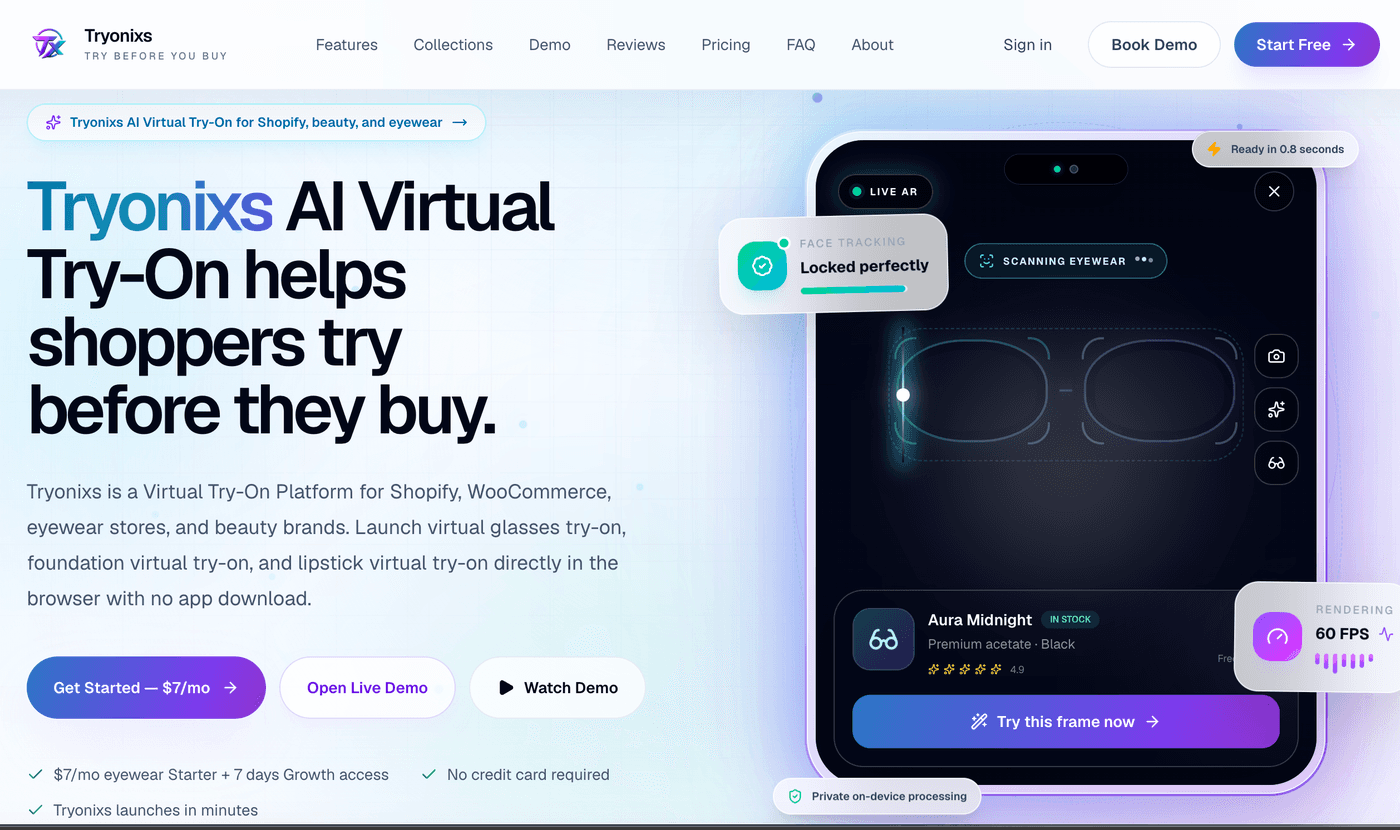
The best virtual try-on software combines accurate real-time face or hand tracking, browser-based delivery with no app download, per-SKU asset mapping, native Shopify or WooCommerce integration, session analytics, and a client-side privacy model — evaluated against your actual product catalog rather than a generic demo.
What "best" actually means for virtual try-on software
"Best" depends entirely on your catalog and platform, so a fair evaluation starts with criteria rather than a ranked list. The questions that matter most: does the tracking hold up on your actual products (not just the vendor's demo assets), does it run in the browser without an app download, how much engineering time does integration take on your stack, what does it cost at your catalog size, and does the privacy model fit your risk tolerance for biometric data.
Vendors that look similar in a sales demo often diverge sharply once you load your own frame shapes, shade ranges, or ring styles — so any shortlist should move to a live trial with real assets before a decision gets made.
Core features every virtual try-on platform should have
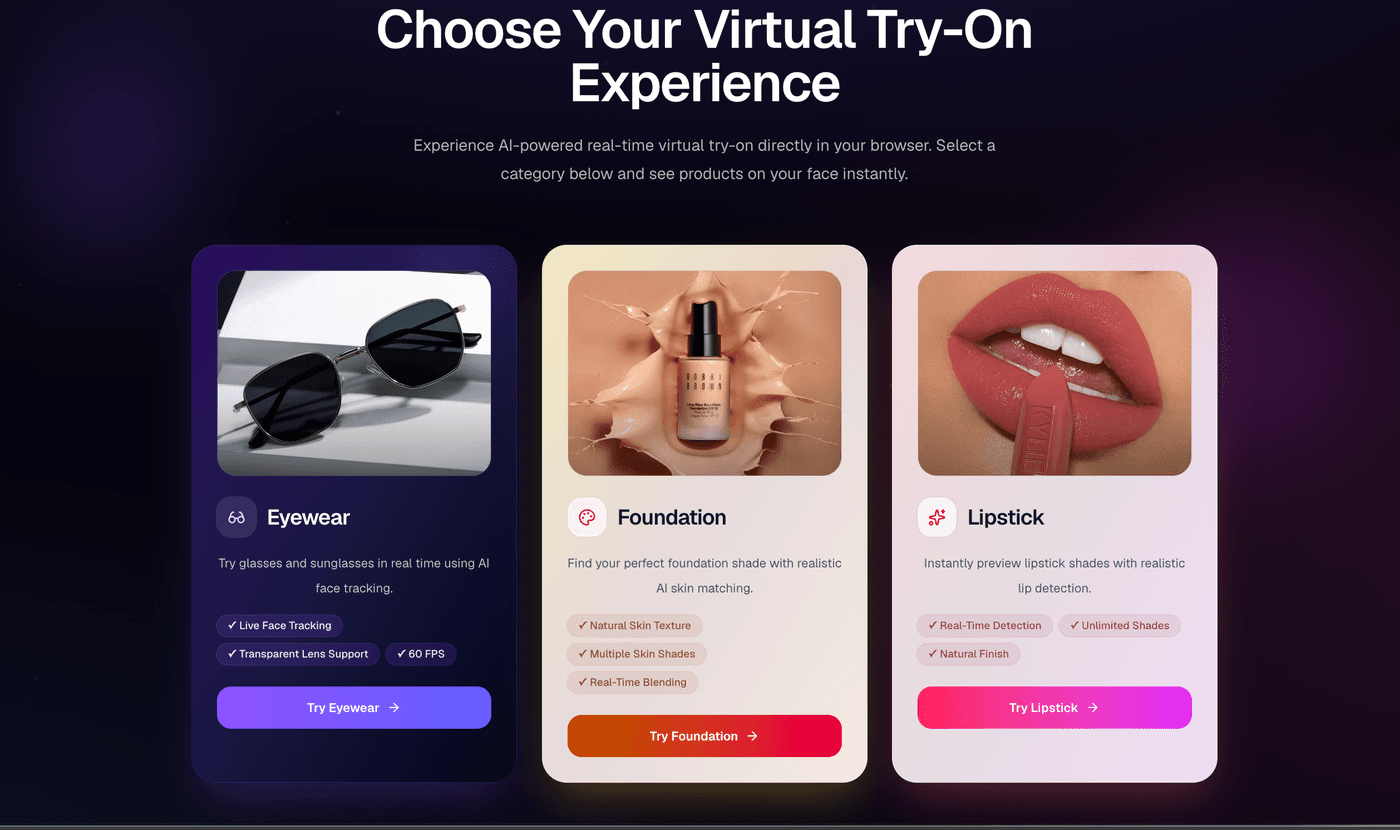
A production-ready platform needs browser-based delivery on both mobile and desktop Safari and Chrome, since that combination represents the majority of retail traffic. It needs face, hand, or body tracking tuned to your category rather than a single generic model, per-SKU asset mapping so each product maps to the correct frame, shade, or gemstone rendering, session analytics that show try-on starts and completion rate by product, and domain allowlisting so the SDK only runs on storefronts you control.
Beyond that baseline, the features that separate platforms are rendering quality (lens tints, gemstone sparkle, foundation finish), how quickly a new SKU can be onboarded, and whether the vendor documents its API and SDK well enough for your developers to extend it later.
Eyewear vs beauty vs jewelry: does one platform do all of it well?
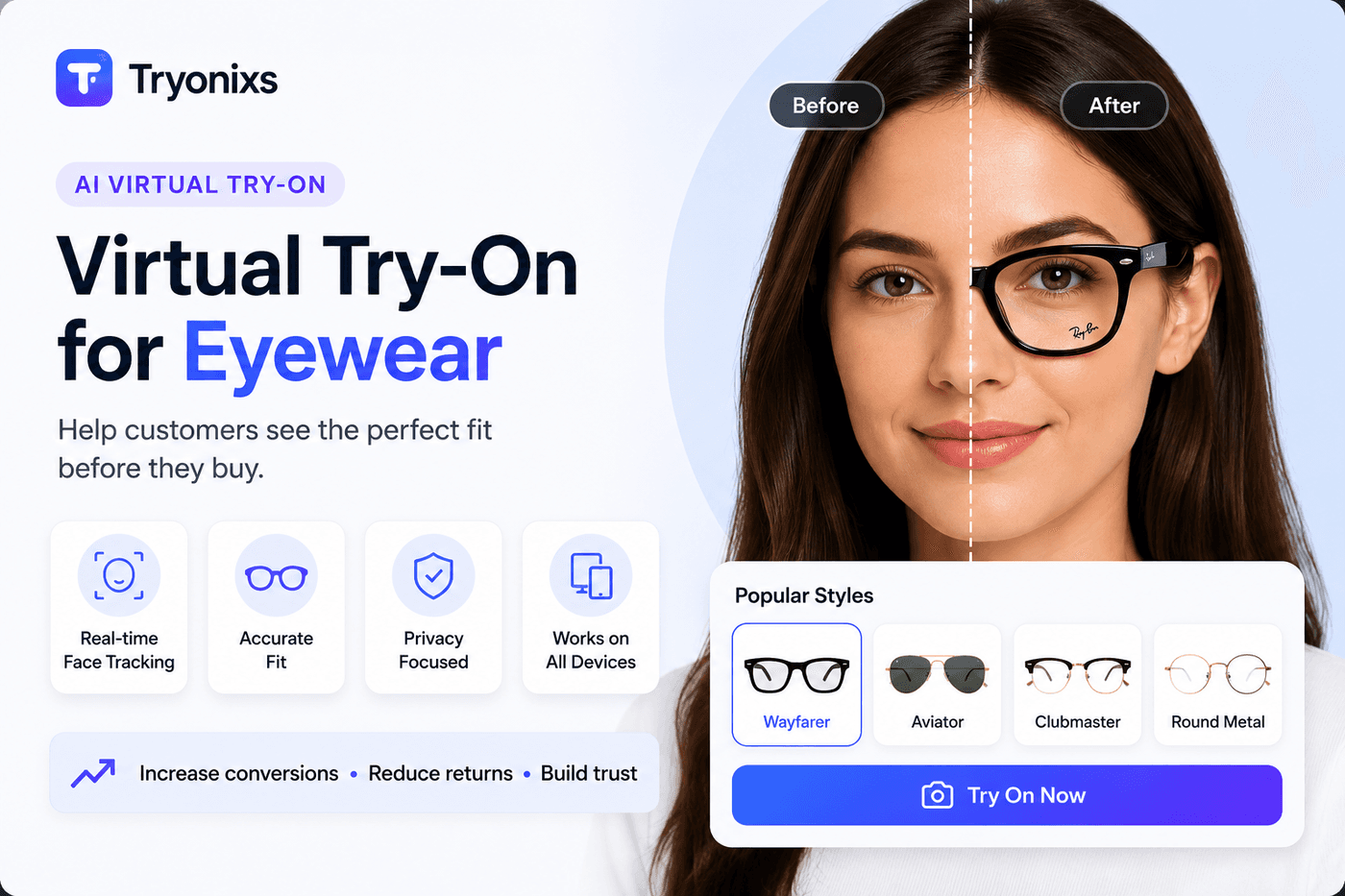
Most virtual try-on vendors started in one category and expanded, and tracking quality still tends to reflect that history. Eyewear needs accurate temple and bridge anchoring across head rotation. Beauty needs facial-region segmentation and finish simulation (matte, dewy, metallic). Jewelry needs separate hand, ear, and neckline tracking modes entirely. If you sell across categories, test each one specifically rather than assuming a platform that nails eyewear will automatically be strong at foundation shade matching or ring try-on.
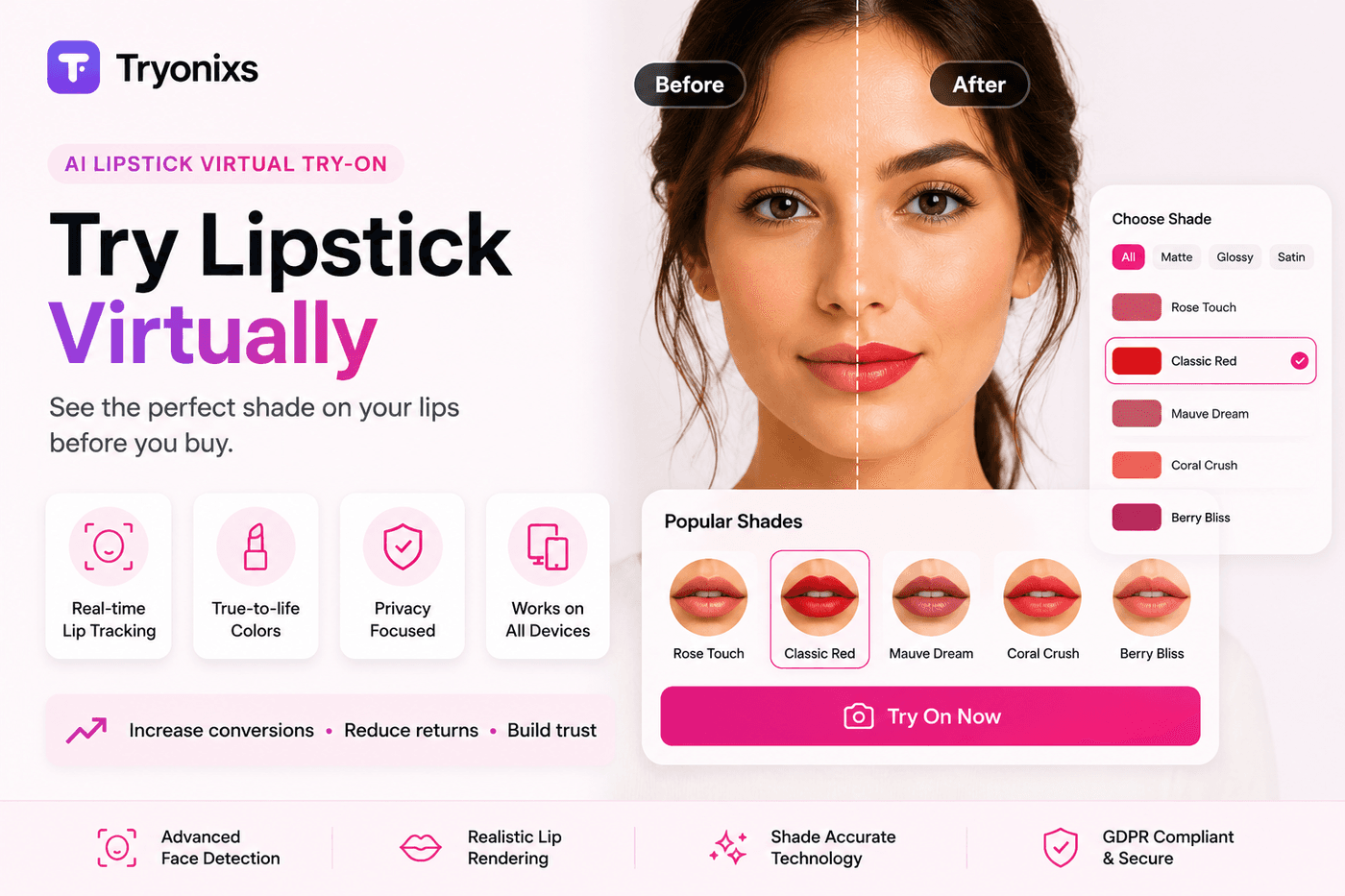
Tryonixs runs eyewear, foundation, and lipstick try-on on the same underlying face-tracking pipeline, with category-specific rendering for lens tints, finish simulation, and color-shade accuracy.
Shopify and WooCommerce integration: what to check before you buy
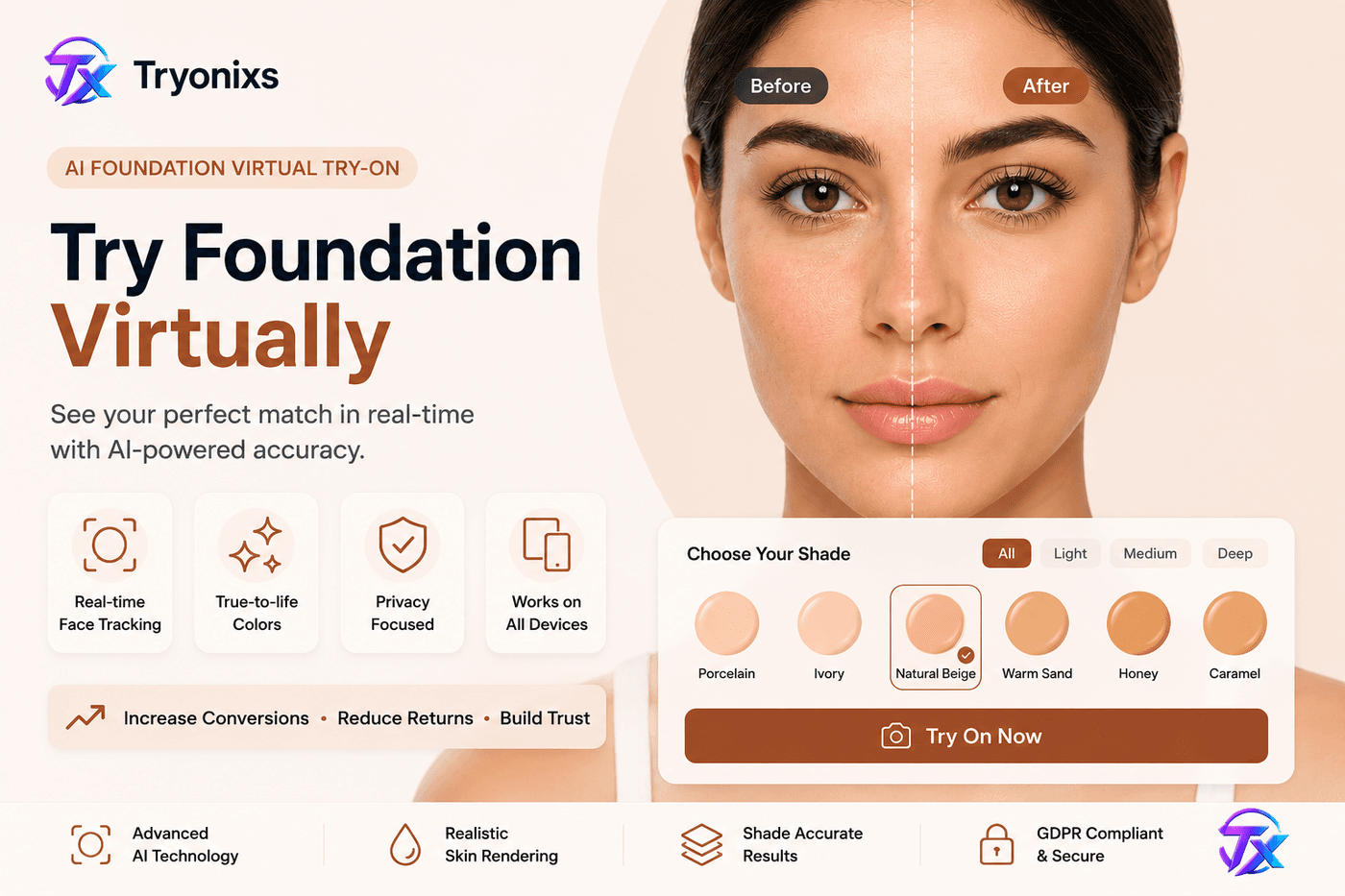
Confirm whether integration is a theme snippet you can drop in yourself, a full app requiring developer setup, or something in between. Check how product variants map to try-on assets — ideally through metafields or product meta rather than a separate spreadsheet you maintain by hand — and ask how the vendor handles page speed, since a poorly built widget can measurably hurt Core Web Vitals. Most merchants with assets ready can go live on Shopify or WooCommerce within a day; if a vendor quotes weeks for a standard storefront, that is worth asking about directly.
Pricing models to expect
Virtual try-on pricing generally follows one of three models: per-session, per-SKU, or flat monthly SaaS tiers. Per-session pricing scales with traffic and can get expensive during high-volume periods like a sale or a product launch. Per-SKU pricing rewards a curated, high-intent catalog over listing everything. Flat SaaS tiers are the most predictable for budgeting but may cap product counts or sessions at each tier. Tryonixs offers a free Starter plan with 15 products and unlimited try-on sessions, which is enough for most merchants to run a real pilot before committing to a paid tier.
How to run a fair evaluation
Shortlist two or three vendors and request a trial using your own product photography, not stock demo assets. Test on mobile Safari and mobile Chrome first, since that is where most shoppers will actually use try-on. Time how long it takes your team to get the first SKU live, check what analytics are available out of the box, and read the vendor's privacy documentation directly rather than relying on a sales summary — specifically whether face tracking runs client-side or whether camera frames are uploaded for server-side processing.
Run the pilot on a real collection for at least two to four weeks before expanding catalog coverage, so you have enough data to compare try-on-enabled SKUs against a control group on add-to-cart rate and returns.
Virtual try-on previews
Frequently asked questions
- What is the single most important feature in virtual try-on software?
- Tracking accuracy on your own product assets. A platform that looks convincing in a vendor demo but struggles with your specific frame shapes, shade range, or jewelry styles will underperform regardless of what other features it offers.
- Do I need different virtual try-on software for eyewear versus beauty products?
- Not necessarily — some platforms, including Tryonixs, run multiple categories on a shared tracking pipeline with category-specific rendering. What matters is testing each category you actually sell against, rather than assuming strength in one transfers to another.
- How much does virtual try-on software typically cost?
- Pricing varies by model — per-session, per-SKU, or flat monthly SaaS. Many vendors, including Tryonixs, offer a free tier (Starter: 15 products, unlimited sessions) so you can pilot before committing to a paid plan.
- Does virtual try-on require customers to download an app?
- The best modern platforms run entirely in the browser using the device camera, with no app download required, on Chrome, Safari, Firefox, and Edge across mobile and desktop.
- How long does it take to launch virtual try-on on Shopify or WooCommerce?
- With product assets ready, most merchants go live on a pilot collection within a few hours to one business day using a theme snippet or plugin. Full catalog rollout depends mainly on how quickly assets can be produced.
- Is customer camera data stored by virtual try-on vendors?
- It depends on the vendor's architecture. With client-side tracking, like Tryonixs uses, face detection runs on the shopper's own device and raw camera frames are not uploaded — only anonymized analytics events are recorded if you enable them. Always confirm this directly in a vendor's privacy documentation before launch.
Launch AI Virtual Try-On on your store in minutes
Start with the free Tryonixs Starter plan — upload up to 15 products, run unlimited virtual try-ons, and integrate with Shopify, WooCommerce, or any custom storefront.
Frequently asked questions
What is the single most important feature in virtual try-on software?
Tracking accuracy on your own product assets. A platform that looks convincing in a vendor demo but struggles with your specific frame shapes, shade range, or jewelry styles will underperform regardless of what other features it offers.
Do I need different virtual try-on software for eyewear versus beauty products?
Not necessarily — some platforms, including Tryonixs, run multiple categories on a shared tracking pipeline with category-specific rendering. What matters is testing each category you actually sell against, rather than assuming strength in one transfers to another.
How much does virtual try-on software typically cost?
Pricing varies by model — per-session, per-SKU, or flat monthly SaaS. Many vendors, including Tryonixs, offer a free tier (Starter: 15 products, unlimited sessions) so you can pilot before committing to a paid plan.
Does virtual try-on require customers to download an app?
The best modern platforms run entirely in the browser using the device camera, with no app download required, on Chrome, Safari, Firefox, and Edge across mobile and desktop.
How long does it take to launch virtual try-on on Shopify or WooCommerce?
With product assets ready, most merchants go live on a pilot collection within a few hours to one business day using a theme snippet or plugin. Full catalog rollout depends mainly on how quickly assets can be produced.
Is customer camera data stored by virtual try-on vendors?
It depends on the vendor's architecture. With client-side tracking, like Tryonixs uses, face detection runs on the shopper's own device and raw camera frames are not uploaded — only anonymized analytics events are recorded if you enable them. Always confirm this directly in a vendor's privacy documentation before launch.
Follow Tryonixs
Connect with Tryonixs on social media for AR virtual try-on updates, product launches, and eyewear technology insights.
Ready to add virtual try-on to your store?
Start free with Tryonixs — 15 products, unlimited try-on sessions, Shopify and WooCommerce integrations included.